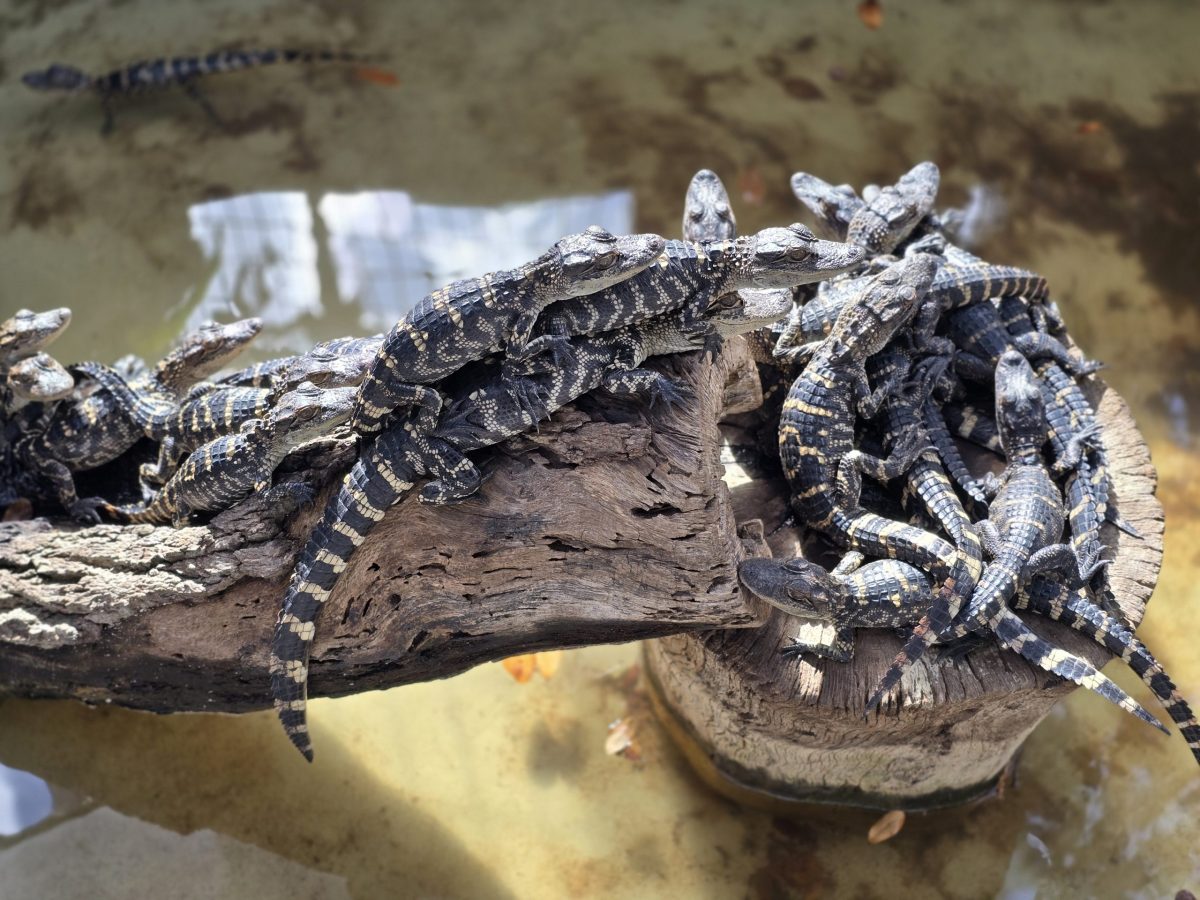
Watch our tiniest, high-energy residents grow, develop their sharp teeth, and practice their defensive postures. The Baby Gator Pod is a highly active nursery environment housing hundreds of baby gators fresh from their shells. It is a favorite stop for children, who love watching the little hatchlings swim, climb, and chirp to one another. In the wild, baby alligators seek shelter in shallow, heavily vegetated freshwater banks to hide from larger predators, feeding on a diet of insects, frogs, and tiny minnows. While wild hatchlings live in tight, high-density pods for safety during their first year of life, only a small percentage survive to adulthood, which is why our protected, high-density nursery pods are designed to keep them completely safe and well-fed.
Swamp School
Fun Fact: Baby alligators communicate with their mothers and each other by making a high-pitched “chirp” or “yelp” sound while still inside their eggs and after they hatch!
Gatorama Explorer Question: Listen closely near the Baby Gator Pod. Can you hear the little hatchlings talking to each other with their cute, signature chirping sounds?