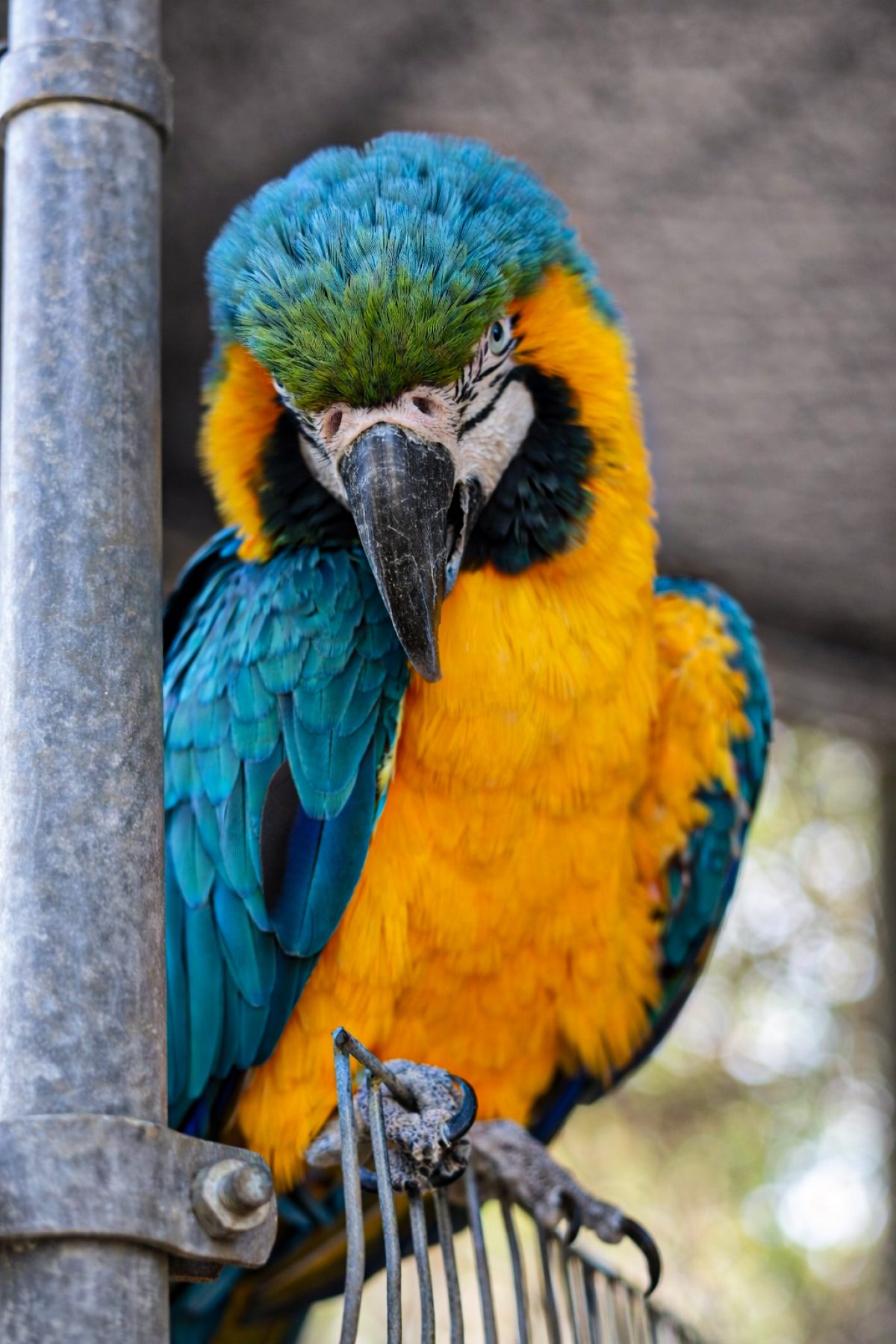
Take a relaxing stroll through our covered boardwalk aviary surrounded by vibrant feathers and cheerful bird calls. This peaceful space is home to free-roaming peacocks, ducks, geese, and colorful native bird species that love to splash in the water and bask under the Florida sun. These birds thrive in diverse wetland, woodland, and grassland habitats, feeding on a healthy, natural diet of seeds, grains, insects, and leafy green vegetation. In the wild, many of these social avian species live in highly dense flocks or communal roosts for protection, a natural high-density social structure that we beautifully recreate in our spacious, flight-friendly aviary.
Fun Fact: Only the male peafowl is called a "peacock" and has the spectacular, colorful train of feathers! The females are called "peahens" and have shorter, brown feathers to help them blend into the brush.
Gatorama Explorer Question: Can you find a peacock showing off his colorful feathers? How many different colors can you spot in his majestic fan?

Crack the code of the cleverest talkers in the treetops!
Parrots are some of the most vocal, intelligent, and expressive birds on the planet! In our Parrot Aviary, you aren’t just listening to beautiful songs—you are hearing highly complex communication. In the wild canopy, parrots use incredibly loud flock calls to find each other over miles of dense forest. Even more amazing, parrots are natural mimics; they can copy the sounds of other animals, environmental noises, and even human speech! They do this using a specialized vocal organ called a syrinx and a thick, muscular tongue, which they control with extreme precision to shape sounds. By tuning your ears to our parrots, you can learn to distinguish between a playful greeting, a loud flock call, and a warning chatter.
Step near the parrots and listen to their chatter. Try saying a friendly “Hello!” or giving a gentle whistle. Can you get one of our clever parrots to mimic you, or can you try to copy one of their unique squawks or clicks?
Listen to how incredibly loud a parrot’s call can be. Why do you think birds that live in thick, dense rainforests or swamp canopies need such loud, piercing voices instead of relying on quiet body language to find their flock?
Parrots are “eyes and ears” communicators. Watch a vocal parrot closely. Can you see how it bobs its head, fluffs its neck feathers, or rapidly dilates its eyes (called “eye pinning”) while making sounds? Explain how these physical signs help show if the parrot is excited, happy, or warning others to give it space.

Location: 10665 N US Hwy 27, Palmdale, FL 33944
Phone: (863) 675-0623 (863) 675-0623
Email: info@gatorama.com
Openning hours: OPEN 5 DAYS A WEEK 10am - 5pm CLOSED on Tuesday and Wednesday